
The Science Behind Seaweed Bioplastic
Plastic packaging is one of the beauty industry's biggest blind spots, most of it isn't recycled, and even the plastic that is "biodegradable" often needs industrial composting facilities most people don't have access to. At ALGAEE, we started asking a different question: what if the packaging came from the same ocean the ingredients did?
That question is what ALGAEE REFILL is built on, and it turns out we're not alone. Seaweed bioplastics have become a genuinely active area of materials science research over the last few years. Here's what the science actually says.
What Makes Seaweed a Good Bioplastic Feedstock?
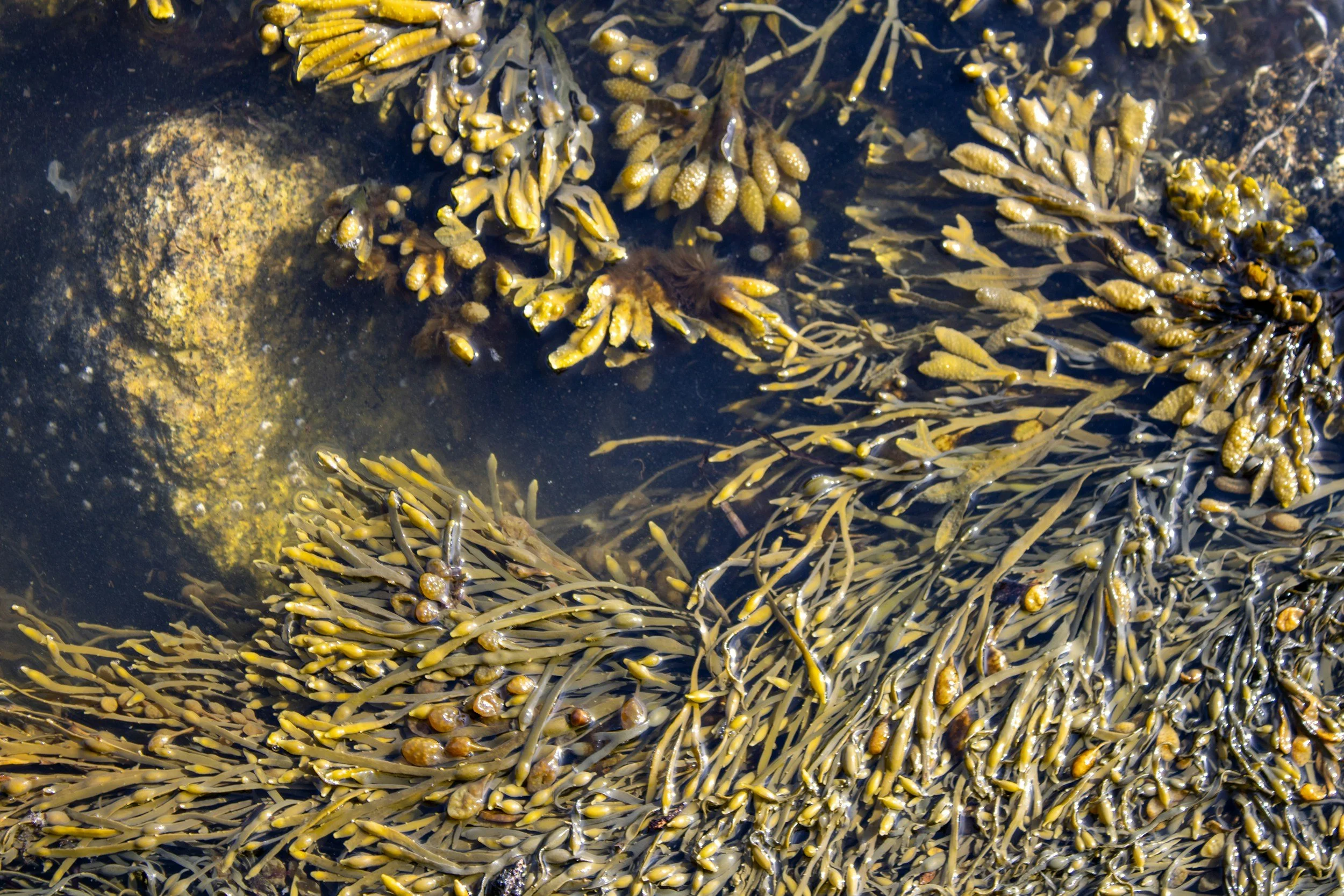
Ascophylum nodosum a common brown algae contains alginate for bioplastics
Seaweed's cell walls are rich in structural polysaccharides , long chains of natural sugars that give the plant its strength and flexibility in the water. Those same properties are exactly what you want in a packaging film: something that holds its shape, resists water, and breaks back down naturally once it's done its job.
A 2024 review in Green Chemistry covers five of the main polysaccharides researchers are working with alginate, carrageenan, ulvan, fucoidan, and laminarin , and each brings something different to the table.
Alginate
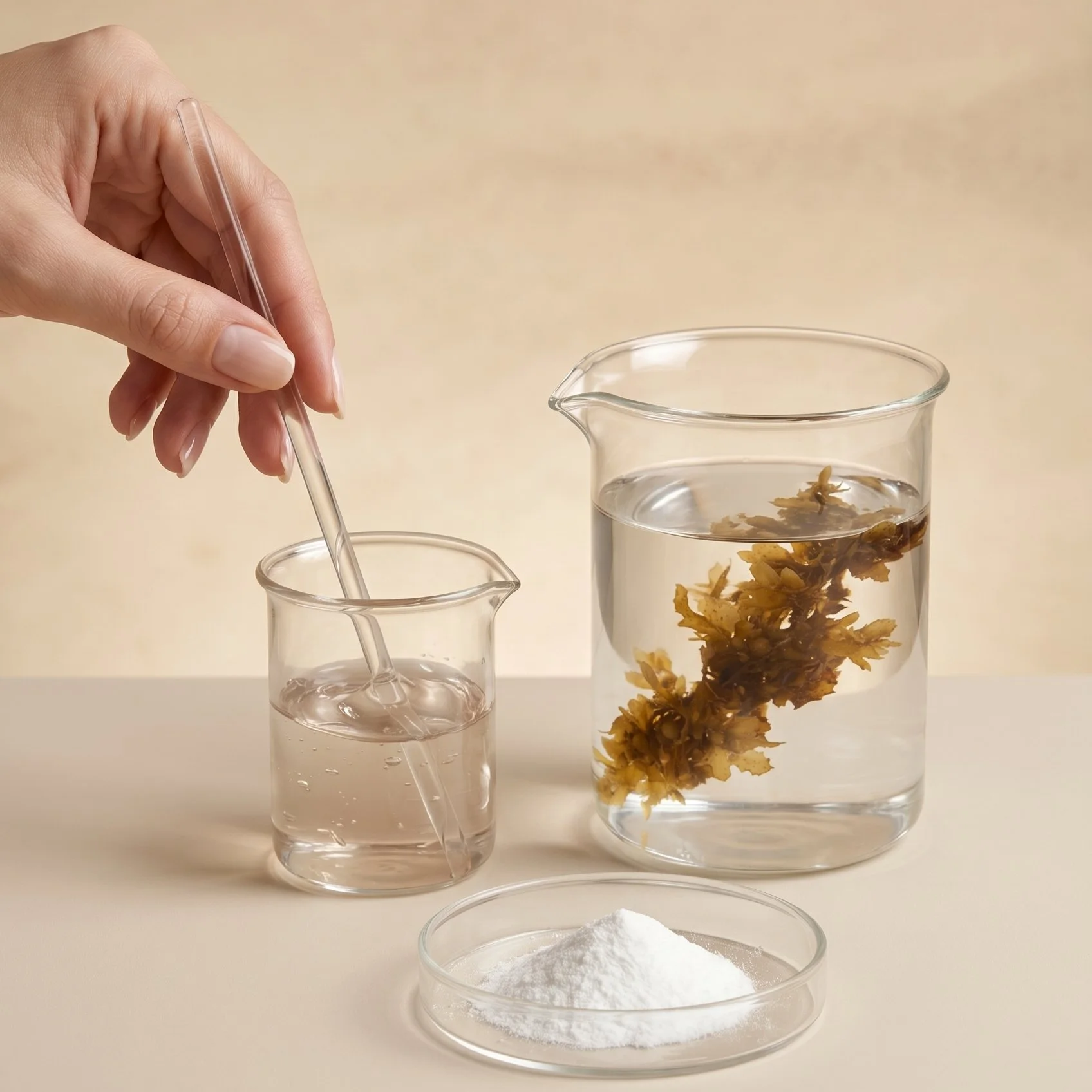
Alginate extracted from the brown algae and its gelling properties.
Alginate is extracted from brown seaweeds (think kelp and Sargassum) and typically makes up 22–44% of the seaweed's dry weight. It's the most widely studied seaweed compound for bioplastics, mainly because it forms strong, flexible films when it cross-links with calcium ions — the same chemistry that makes alginate a common thickener in food.
A 2025 review on brown seaweed valorization highlights alginate films' low oxygen permeability and compatibility with active ingredients like antimicrobials and antioxidants — meaning the packaging itself can help protect what's inside it, not just contain it.
One striking real-world example: researchers working with Sargassum natans — an invasive brown seaweed currently overwhelming Caribbean coastlines , built a calcium alginate composite film that fully degraded in compost within 14 days and outperformed commercial packaging as an oxygen barrier. Turning a coastal nuisance into a packaging material is exactly the kind of circular thinking we're chasing.
Carrageenan
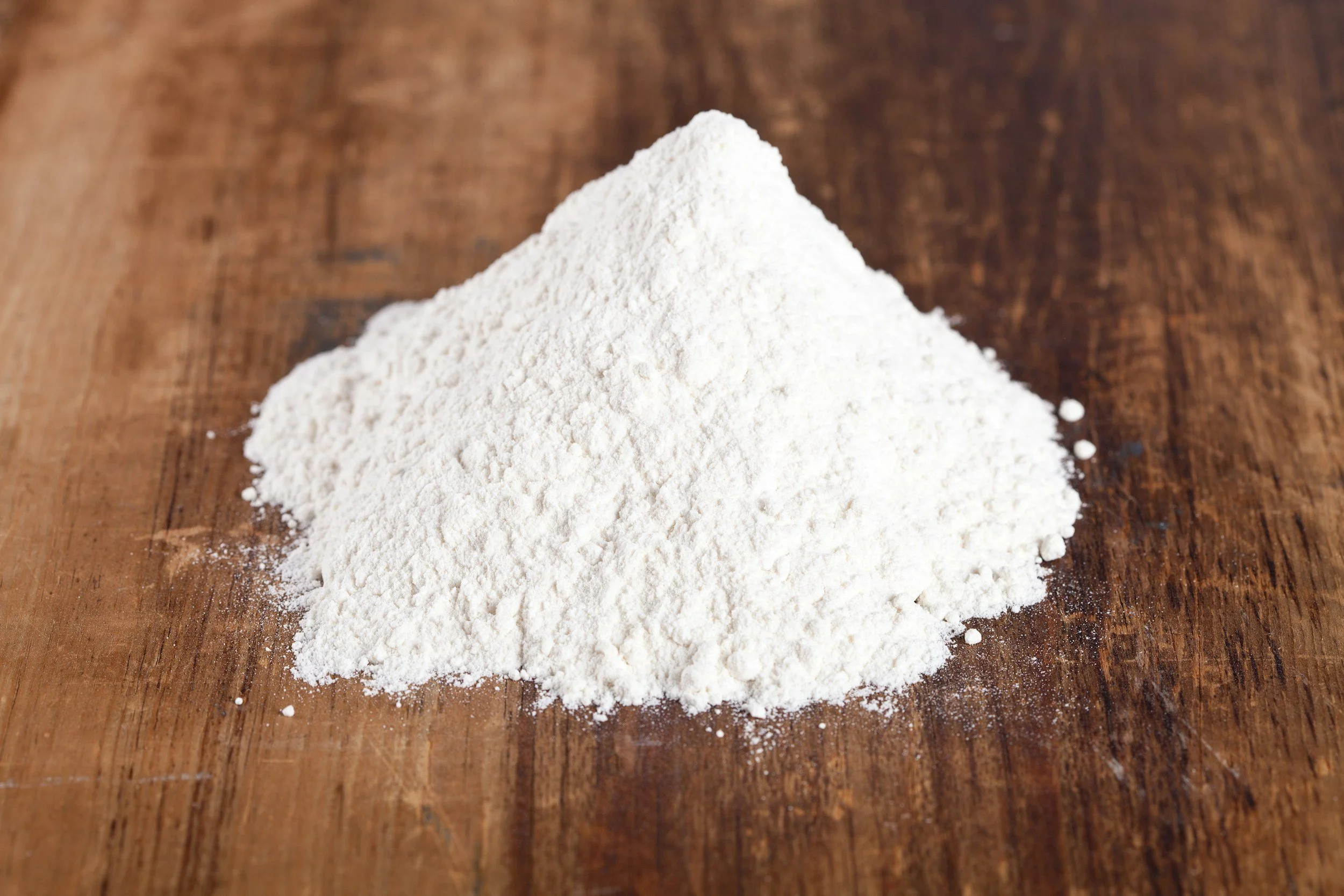
Refined Carrageenan is a white powder from the red algae.
Extracted mainly from red seaweeds, carrageenan is already a familiar ingredient in food (it's the thickener behind a lot of plant-based dairy). As a bioplastic, it forms clear, flexible films, and researchers comparing refined vs. semi-refined carrageenan have found meaningful differences in transparency and flexibility depending on how it's processed — useful data for tuning a film to a specific packaging need.
Ulvan, Fucoidan, and Laminarin
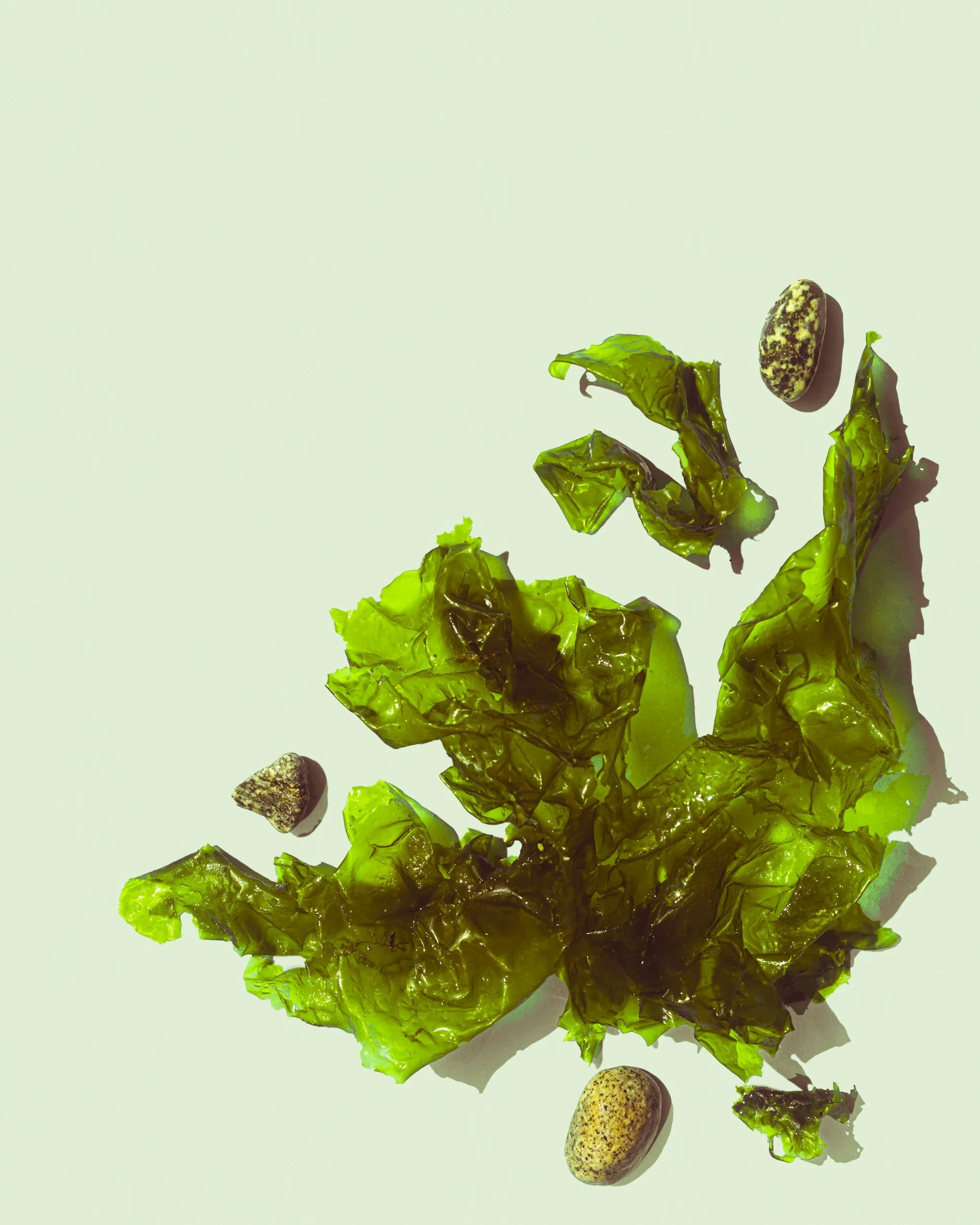
Ulva algae
These three get less headline attention than alginate and carrageenan, but they're active areas of research too. Ulvan comes from green seaweeds, fucoidan and laminarin from brown ones — and beyond their film-forming potential, both have documented bioactive properties (antioxidant and immune-modulating effects, among others) that researchers are exploring for packaging with genuine functional benefits, not just a compostable shell.
The Recent Momentum
This isn't a niche curiosity anymore. In 2024, researchers at Aberystwyth University's Institute of Biological, Environmental and Rural Sciences published new work in the journal Algal Research on combining alginate with other biological compounds to improve strength and elasticity for food wrapping , one of several projects (alongside companies like Kelpi and Notpla) pushing seaweed packaging toward real commercial use as single-use plastic bans expand globally.
Where ALGAEE REFILL Fits In
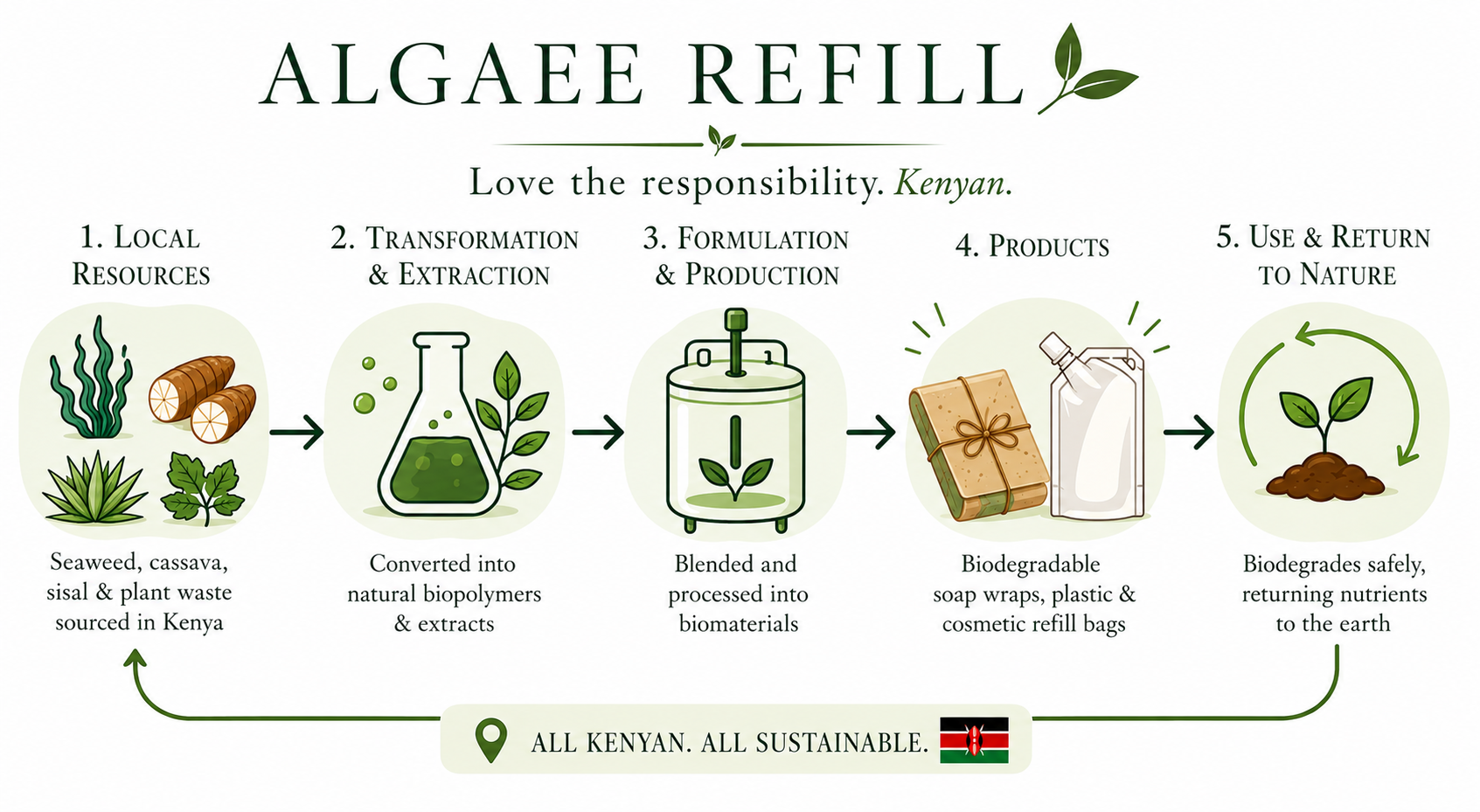
Our own materials work builds on this same science, adapted for what's actually available to us in Kenya. We're blending seaweed-derived polysaccharides with cassava and sisal , two abundant, locally sourced plant materials , to develop biodegradable bioleather, dissolvable soap wraps, and refill pouches. It's early-stage, hands-on experimentation, but it's grounded in the same principles researchers around the world are validating: seaweed polysaccharides can genuinely replace petroleum-based plastic in real packaging applications.
We're Turning This Into a Course
There's a lot of research out there, but very little of it is written for people who actually want to make something with it, formulators, small cosmetics brands, students, or anyone curious about building with seaweed materials rather than just reading about them.
We're developing a course on seaweed bioplastic fundamentals: the science, the extraction basics, and how to start experimenting with your own biomaterial formulations. It's still in development, and we're opening a waitlist now so early sign-ups get first access (and likely a launch discount) when it goes live.
