
The best Natural skincare ingredient for sensitive skin
Most "natural ingredients for sensitive skin" lists repeat the same handful of names aloe, shea butter, chamomile and organic oils. Useful, but well covered. There's one ingredient that rarely makes those lists despite having some of the strongest published research behind it for exactly these two concerns: UV damage and sensitive, reactive skin.
It's algae. One organism, evolved to survive constant UV exposure and oxidative stress in the ocean , and it turns out the same defenses that protect it also protect your skin.
Here's what the research actually shows.
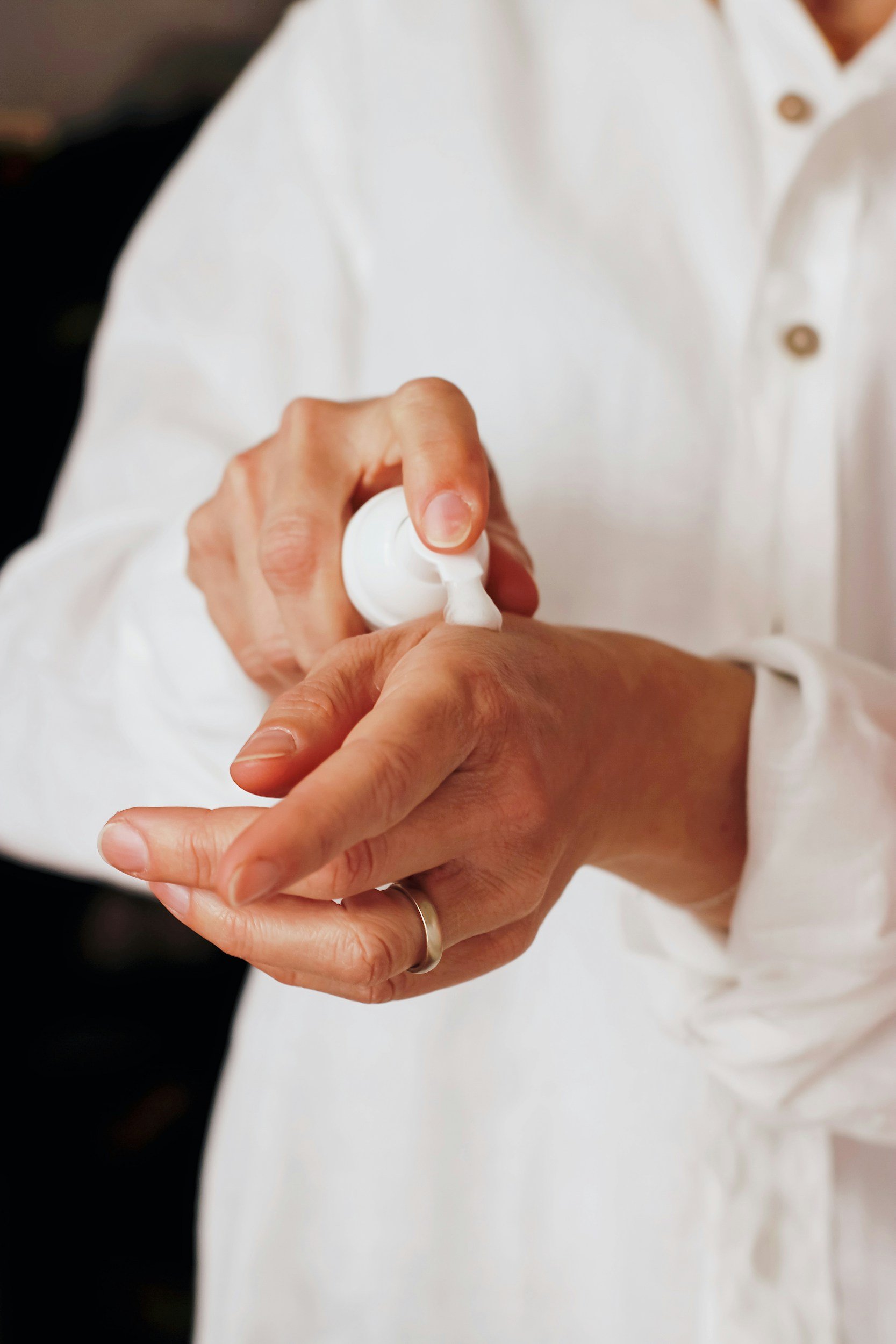
Women applying natural skincare.
What Is Algae Skincare?
Algae skincare uses extracts from marine algae , both macroalgae (seaweed) and microalgae — as active ingredients in cosmetic formulas. Different species bring different strengths, which is why you'll see a whole family of algae-derived ingredients: hydrating alginates, antioxidant-rich phlorotannins, UV-shielding mycosporine-like amino acids, and more.

Seaweed drying in open space.
The Research: What This One Organism Can Actually Do
1. Protects skin cells against UV damage This is where the science gets genuinely exciting. Multiple peer-reviewed studies have tested algae extracts directly against UV exposure in skin cells:
A 2022 study on red algae (Halymenia durvillei) found that its extract protected skin fibroblasts and keratinocytes from UVA/UVB damage — reducing oxidative stress markers, limiting the enzymes that break down collagen, and boosting the skin's own antioxidant defenses (Molecules, 2022).
Brown algae (Fucus vesiculosus) extracts rich in phlorotannins showed measurable UV-protecting activity, enough that researchers evaluated them as a natural alternative in sunscreen-style formulas (Marine Drugs, 2022).
Microalgae-derived xanthophylls significantly reduced oxidative and inflammatory stress markers on reconstructed human epidermis exposed to simulated solar UV (International Journal of Molecular Sciences, 2023).
Red algae compounds called mycosporine-like amino acids (MAAs) act as natural UV-absorbing shields, a defense mechanism the algae evolved to survive intense sun exposure in shallow water (Marine Drugs, 2019).
None of this means algae skincare replaces sunscreen — it doesn't, and no cosmetic product should ever be marketed as disease prevention. But it does mean these extracts have measurable, published, cell-level protective effects against the same UV damage that ages and stresses your skin every day.
2. Deep hydration through polysaccharides Algae are packed with polysaccharides like alginates and fucoidans. These form a lightweight, breathable film on the skin that locks in moisture and helps reinforce your skin's natural barrier.
3. Antioxidant defense The same antioxidant compounds algae use to survive oxidative stress in the ocean go to work defending your skin against environmental damage and premature aging.
4. Skin barrier repair with amino acids and minerals Algae extracts are naturally rich in amino acids and trace minerals like zinc, magnesium, and iodine — supporting the skin's repair processes and a resilient barrier.
5. Calming, anti-inflammatory properties for sensitive skin Many algae compounds have anti-inflammatory effects, which is why algae-based products are often well tolerated by sensitive or reactive skin — often better tolerated than synthetic actives.
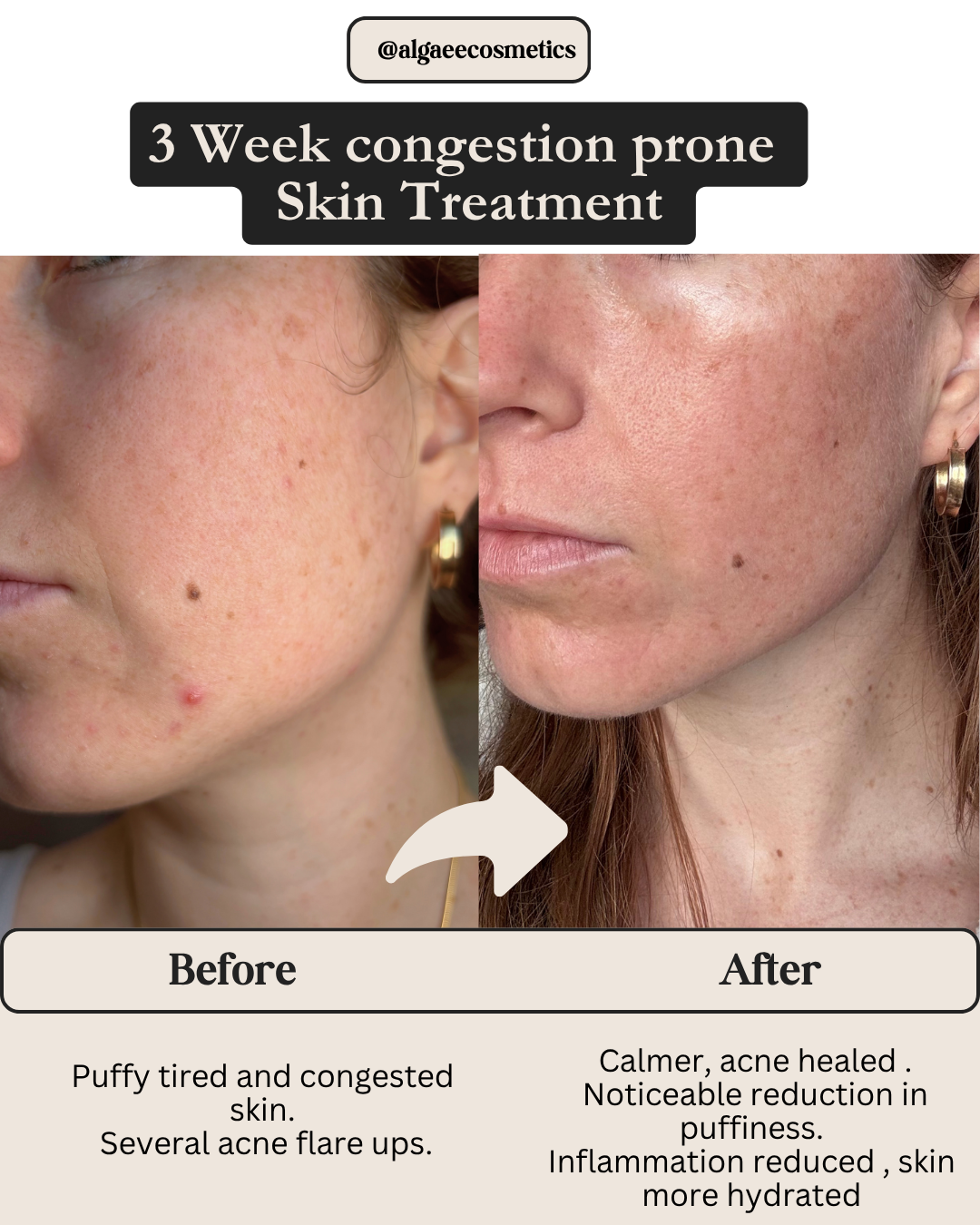
Before and After of Using skincare with algae extracts.
Frequently Asked Questions
Is algae skincare good for sensitive skin? Yes, algae extracts are naturally anti-inflammatory and calming, making them one of the better-tolerated natural ingredients for reactive or easily irritated skin, unlike stronger synthetic actives that can trigger sensitivity.
Can natural ingredients actually help protect skin from UV damage? Published research shows several algae-derived compounds reduce UV-induced oxidative stress and cell damage at a cellular level. That said, no natural ingredient replaces sunscreen, think of algae extracts as supporting your skin's defenses, not replacing SPF.
What does algae extract actually do for skin? Depending on the species, algae extract can hydrate (via polysaccharides like alginates), defend against environmental stress (via antioxidants), support barrier repair (via amino acids and minerals), and calm inflammation.
Are natural skincare ingredients as effective as synthetic ones? It depends on the ingredient and the claim. For algae specifically, there's a growing body of peer-reviewed research (linked above) showing measurable effects on UV-induced cell damage, hydration, and inflammation — not just anecdotal claims.
Why It's a More Sustainable Choice Too
Beyond what it does for your skin, algae is one of the most sustainable raw materials in cosmetics. It grows fast, doesn't need arable land, fresh water, or fertilizer, and many species actively absorb CO2 as they grow. Choosing algae-based skincare isn't just a win for your skin — it's a lower-impact choice for the planet.
How We Use Algae in Our Formulas
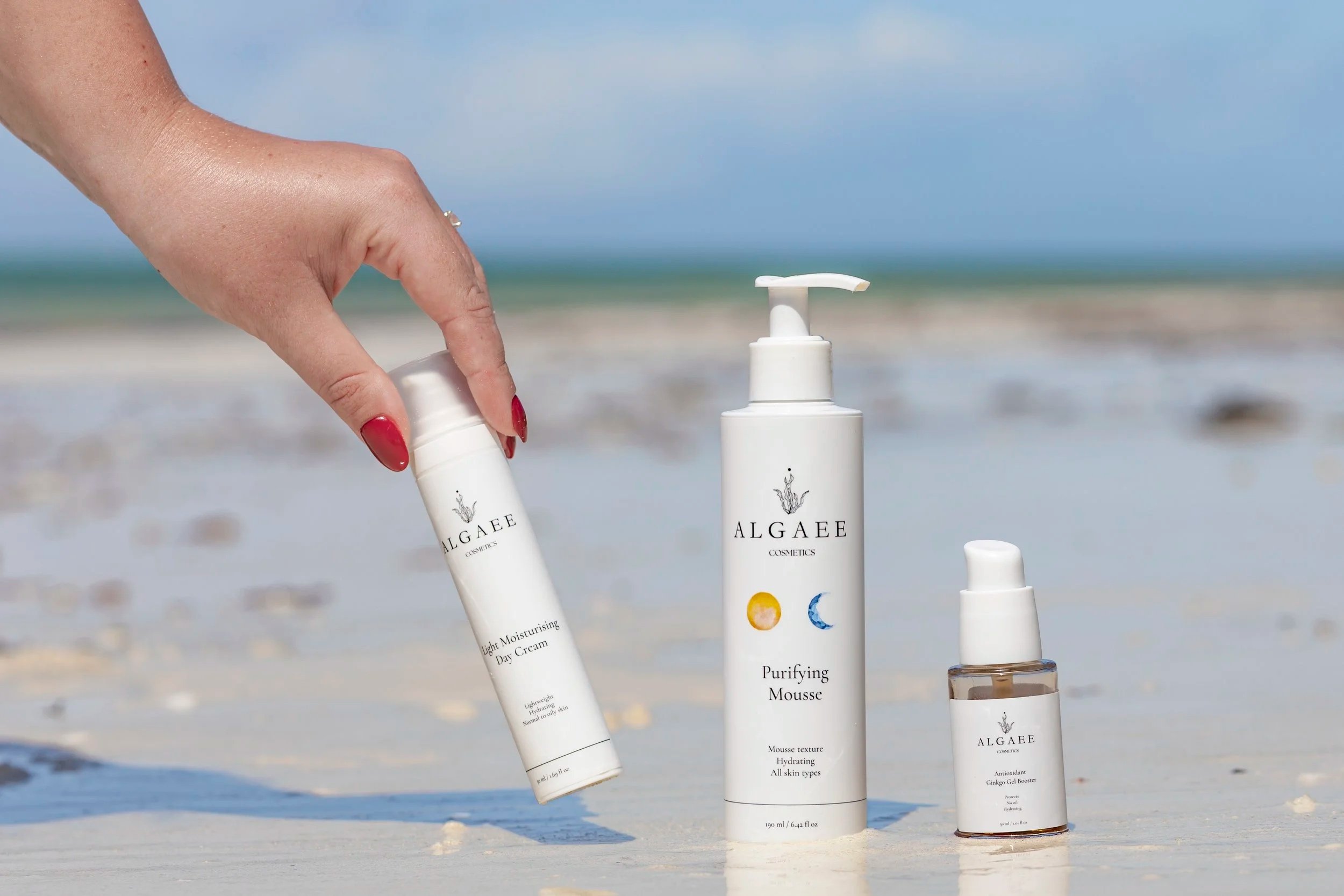
Algaee Cosmetics products.
This is exactly why algae is at the core of what we do. Our range, including our Antioxidant Ginkgo Gel Booster, Pigment Perfecting Serum, and Collagen Anti-Age Night Cream, is built around these same principles: hydration, antioxidant defense, and barrier support, sourced from algae rather than synthetic fillers.
If you've been curious about switching to algae-based skincare, now you know exactly why it's worth it — it's not a trend, it's chemistry that's been perfected by nature for millions of years. Next time you flip a product over, look for algae extract on the ingredient list. It's a small line with an outsized amount of science behind it.
Curious which product fits your skin? Browse the full range.
